
Quick ID Guide
What You’ll See
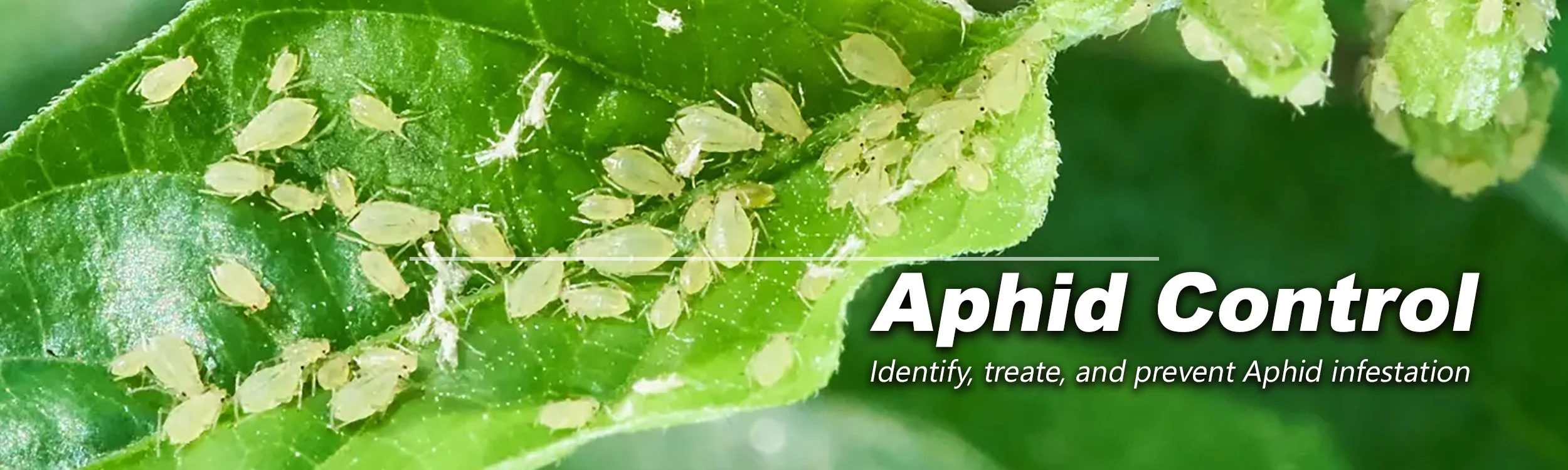
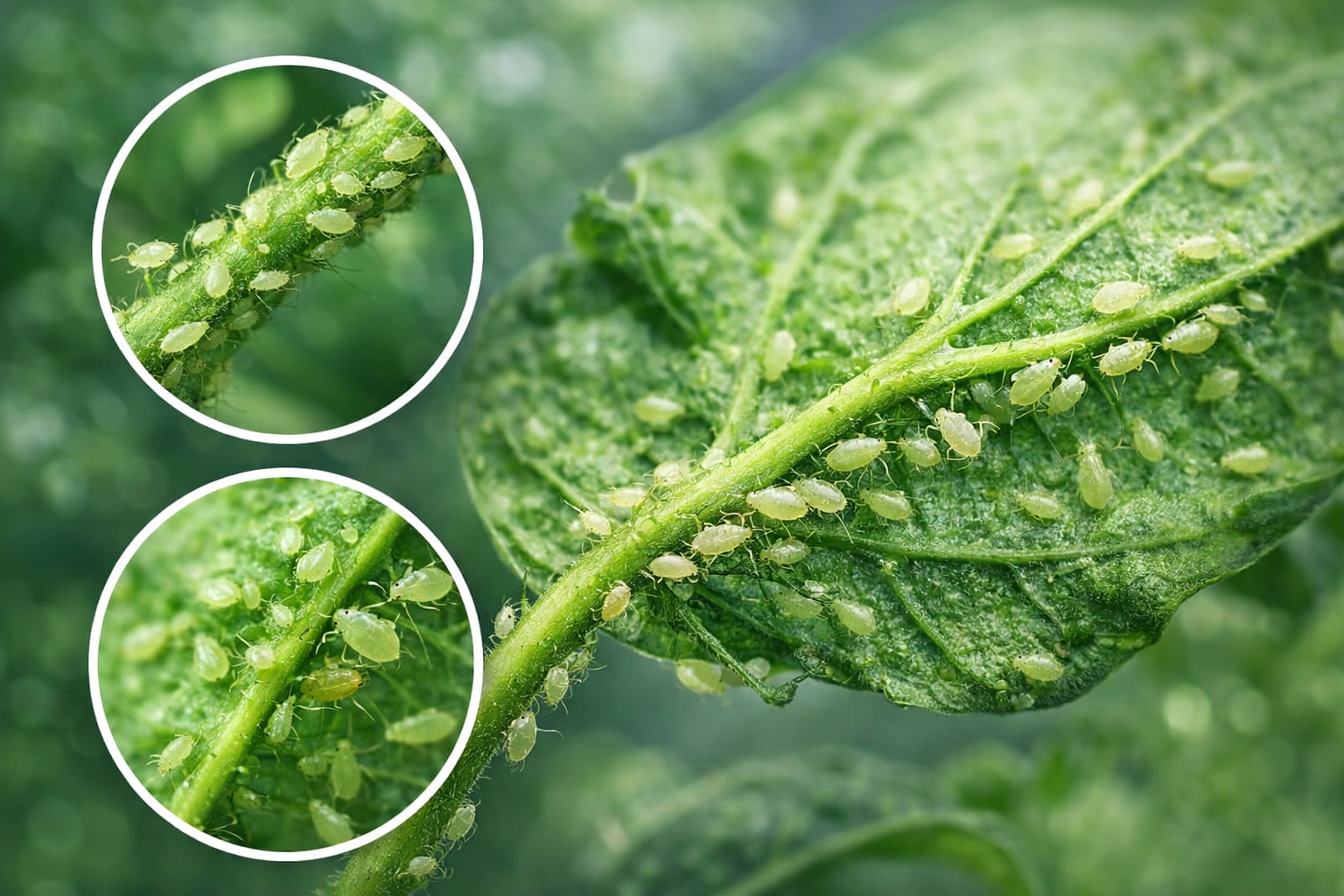
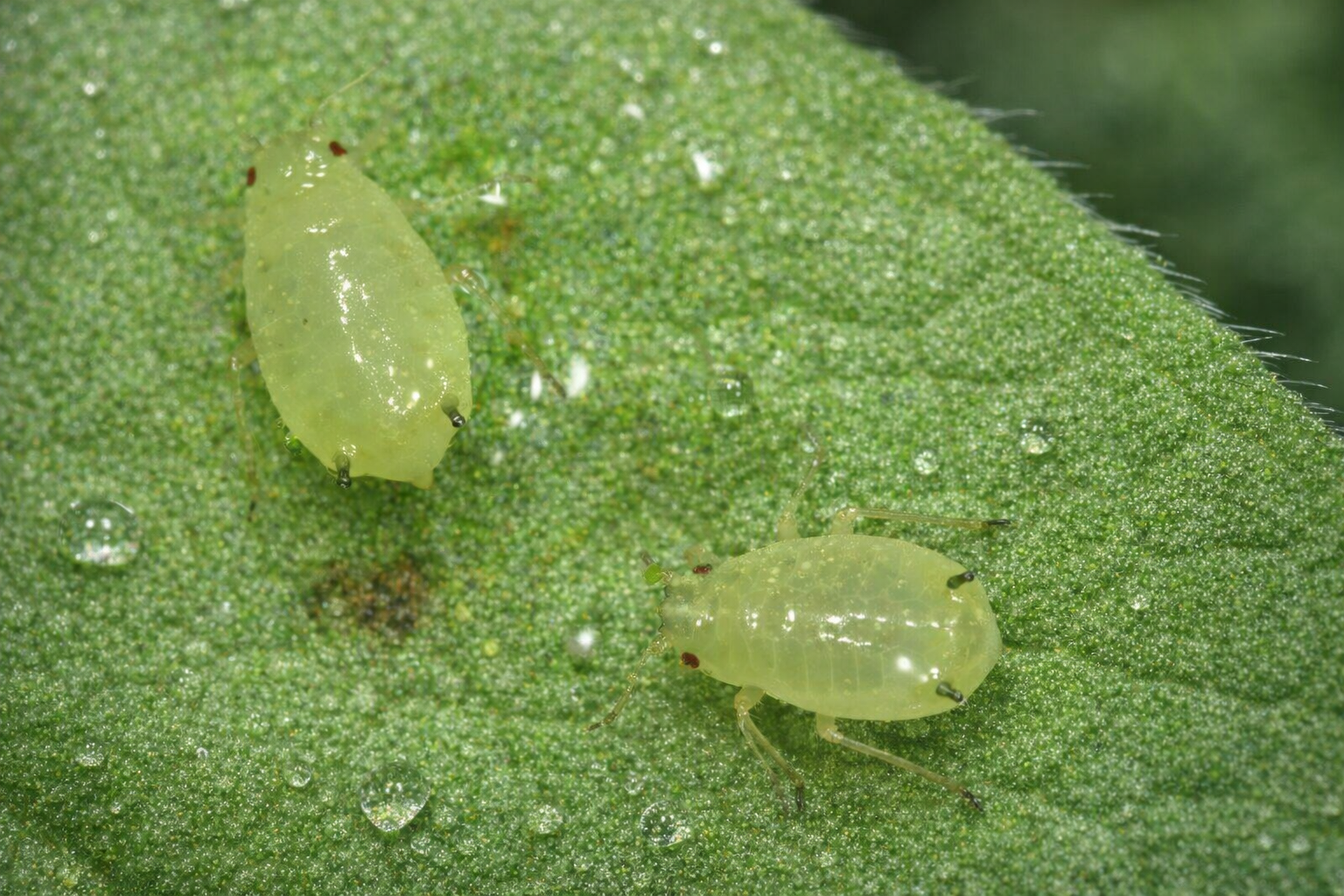
Quickly confirm an aphid infestation by spotting soft-bodied, pear-shaped aphids clustered on tender growth, plus classic aphid damage like leaf curl, yellowing, and sticky honeydew.
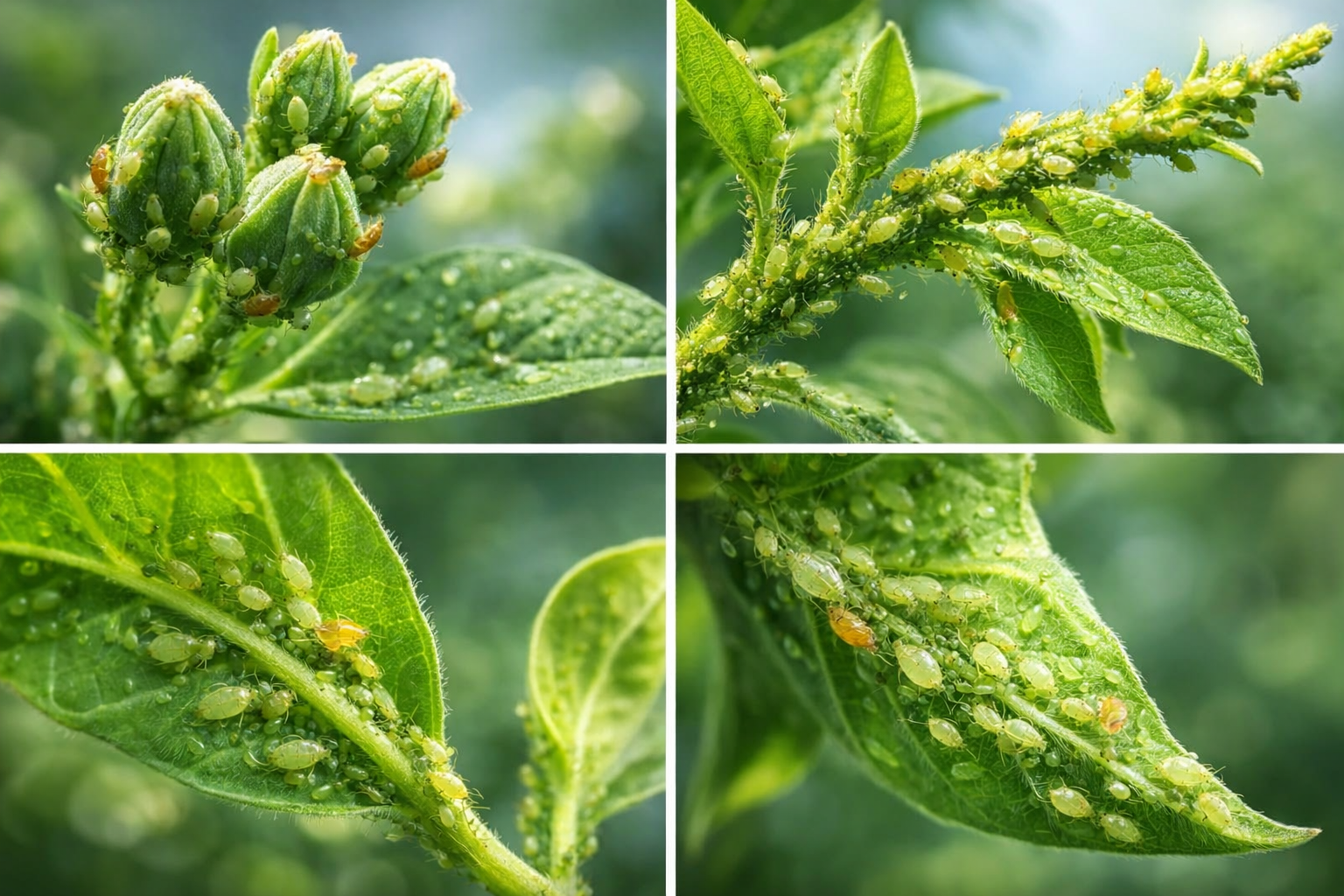
Find aphids on plants fast by checking new growth, unopened flower buds, and the undersides of young leaves, especially near leaf veins and tender stems where sap is easiest to access.
Best Places to Check for Aphids
Signs of Aphids
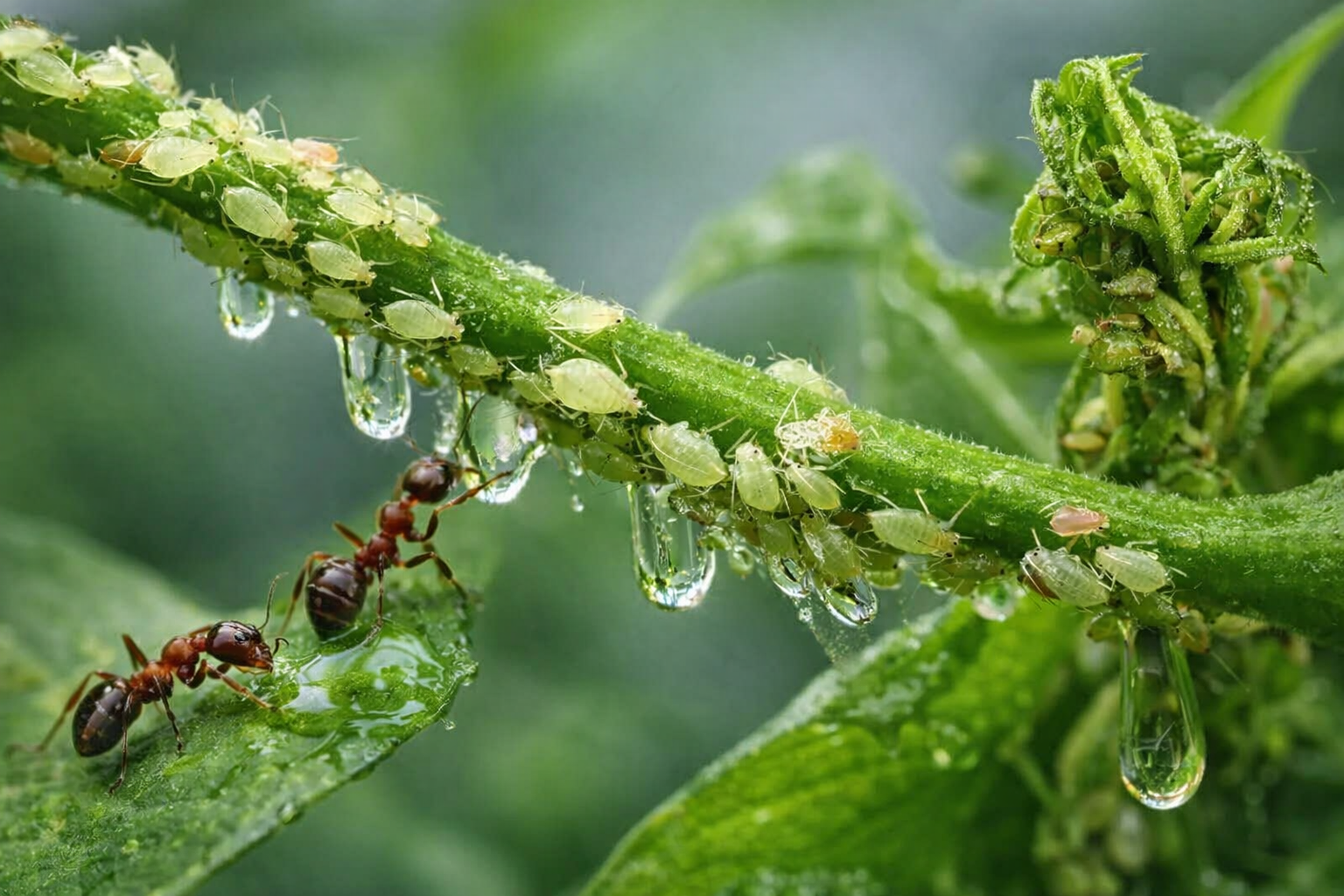
Aphids vs. lookalikes using simple signs: slow-moving clustered insects, sticky honeydew + ants, sooty mold, and new-growth distortion—all strong indicators you need aphid treatment.
Aphid Prevention
Regular plant inspection is the first line of defense in aphid prevention. Check new growth, leaf undersides, and tender stems weekly for early signs of an aphid infestation. Catching aphids early prevents rapid population explosions and reduces the need for aggressive treatments. Early detection helps protect garden plants, houseplants, and vegetable gardens from long-term damage.
1
Inspect Plants Early & Often
Strengthen Plant Health
2
Healthy plants are naturally more resistant to aphid damage. Avoid over-fertilizing with nitrogen, which attracts aphids and promotes soft, vulnerable growth. Use proper watering, balanced nutrients, and good airflow to build strong plant defenses. Stress-free plants are less attractive to common garden pests and recover faster if exposed.
Encourage Beneficial Insects
3
Support beneficial insects like ladybugs, lacewings, and parasitic wasps that provide natural aphid control. Plant pollinator-friendly flowers and avoid broad-spectrum pesticides that kill helpful predators. A balanced garden ecosystem reduces recurring aphid infestations and promotes long-term pest management.
Keep a Clean Growing Environment
4
Maintain a clean garden by removing plant debris, weeds, and heavily infested leaves. Quarantine new plants before introducing them to your garden or indoor grow space to prevent spreading aphids and other plant pests. Consistent sanitation reduces breeding sites and supports effective integrated pest management (IPM).
Aphids
Aphids are tiny sap-sucking insects that cluster on new growth and leaf undersides. Their feeding causes curled leaves, yellowing, and weak growth. They also produce sticky honeydew that attracts ants and can lead to black sooty mold. Because aphids reproduce quickly, early inspection and gentle control help prevent serious plant damage.
The Symbiotic Relationship Between Aphids and Ants
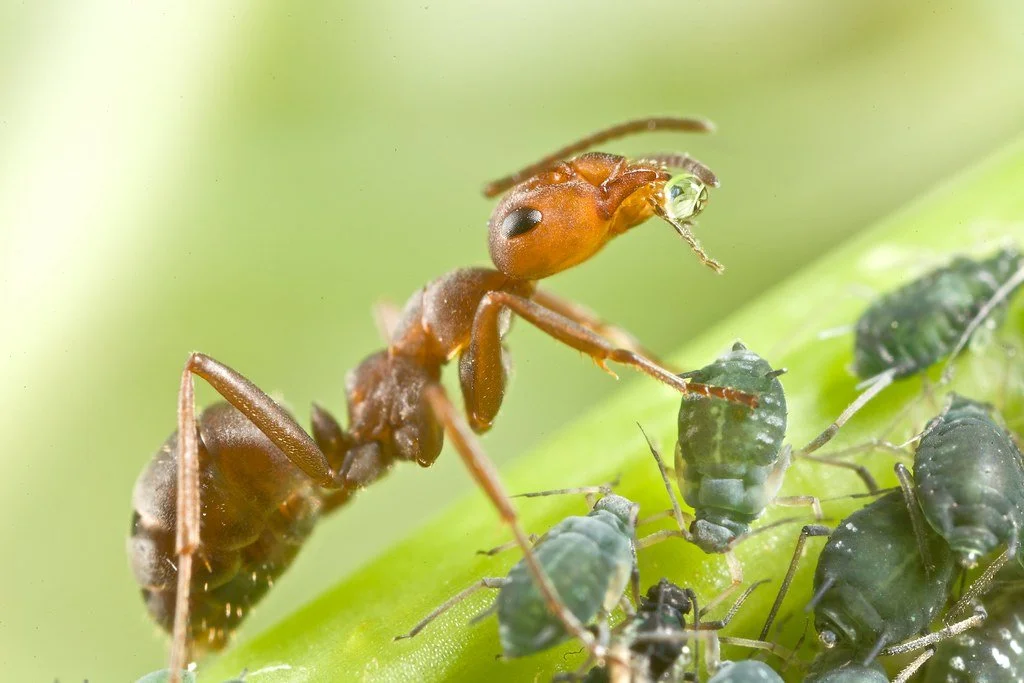
Aphids and ants share one of the most fascinating mutualistic relationships in the garden ecosystem. Both species benefit—often at the expense of your plants. Aphids feed on plant sap and excrete a sugary liquid called honeydew. This substance is rich in carbohydrates and is highly valuable to ants. Ants will actively “milk” aphids by stroking them with their antennae, stimulating the release of honeydew, which the ants then consume.
Treatment Plan
1) Control the Ants First (Break the Protection Cycle)
Why: Ants protect aphids from predators and help them spread. If ants remain, aphid control will often fail.
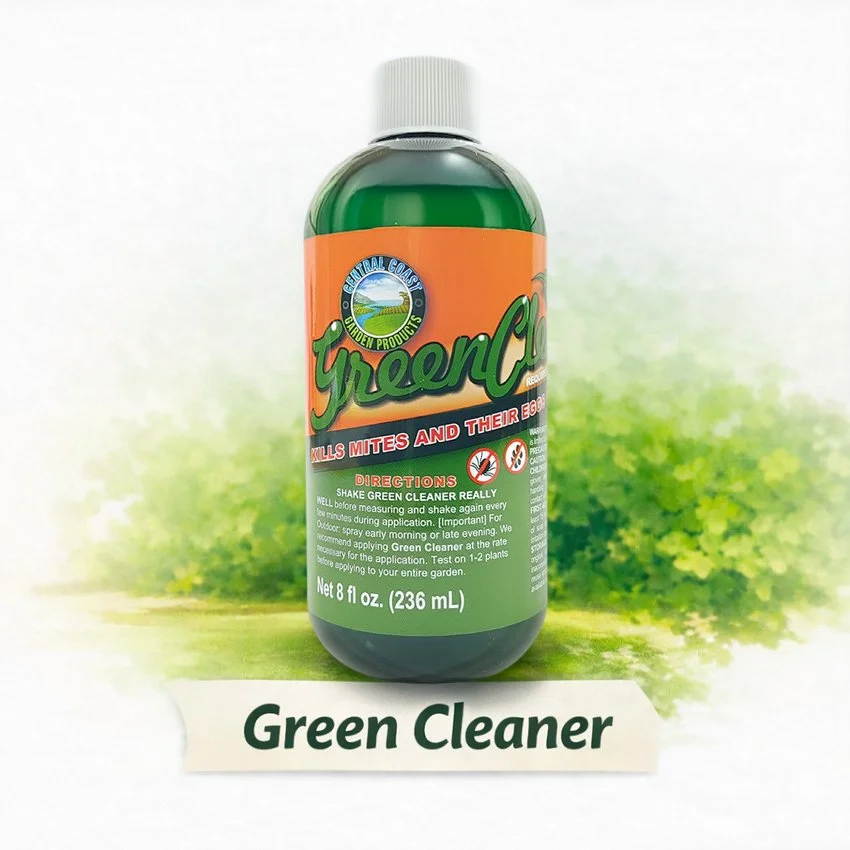
What to do: Spray Green Cleaner at 2oz per gal around pots, beds, or tree trunks. Target ant trails leading to plants. Once ants are eliminated, aphids become vulnerable to treatment and natural predators.
2) Spray Aphids Thoroughly (Direct Contact Control)
Why: Aphids are soft-bodied and easy to kill with contact sprays, but coverage is critical.
What to do: Apply a foliar spray such as Green Cleaner. Spray tops and undersides of leaves, stems, and new growth where aphids cluster. Spray until the plant is fully coated, not just misted. This kills active aphids quickly.
3) Repeat Applications on a Schedule (Kill New Hatchlings)
Why: Aphid eggs and hidden individuals can survive the first treatment.
What to do: Repeat spraying every 3–5 days for at least 2–3 cycles. This breaks the reproductive cycle and prevents reinfestation. Consistency is key for complete control.
4) Prevent Future Infestations (Long-Term Protection)
Why: Aphids return when conditions favor them. Prevention keeps populations low.
What to do:
Inspect plants weekly, especially new growth
Control ants continuously
Keep plants healthy and avoid excess nitrogen fertilizer
Apply preventative sprays as needed
Frequently Asked Questions
-
Yes. Aphids reproduce extremely fast, and females can give birth to live young without mating. A small infestation can turn into a major problem in just days.
-
Aphids look like tiny pear-shaped bugs clustered together, often found on:
New growth
Underside of leaves
Stems
Flower buds
You may also see white shed skins and sticky residue.
-
Most aphids live on plants, but some species live in soil and feed on roots. However, the majority are found on leaves and stems.
-
Small infestations may decrease naturally if beneficial insects like ladybugs are present, but most infestations require treatment to prevent plant damage.
-
Aphids are attracted to tender new growth, high nitrogen levels, and stressed plants. Over-fertilizing, poor airflow, and bringing in infested plants are common causes. Warm weather helps aphids reproduce extremely fast.
-
revent aphids by:
Inspecting plants regularly
Avoiding over-fertilizing
Improving airflow
Keeping plants healthy
Use Green Cleaner
Controlling ants
Need a Product?
Root Cleaner
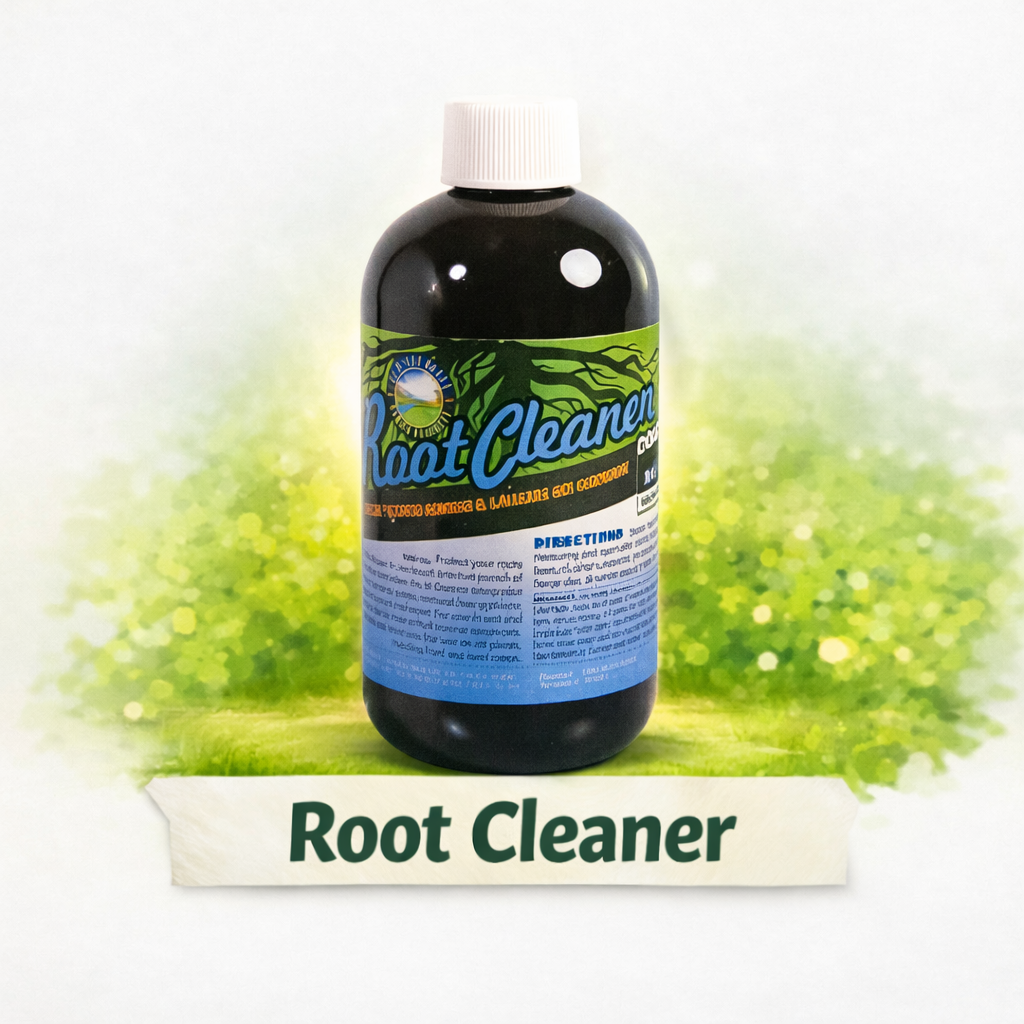
Fast and effective soil drench that helps eliminate fungus gnat larvae, flush out root-zone buildup, and support healthier plant roots for stronger growth in houseplants, raised beds, and container gardens.
Green Cleaner
Safe and effective integrated pest management (IPM) solution for natural & non-toxic pest control—helping you prevent and treat common garden pests like aphids, spider mites, whiteflies, and fungus gnats while protecting plants