
Quick ID Guide
What You’ll See (Visual Identification)
Description:
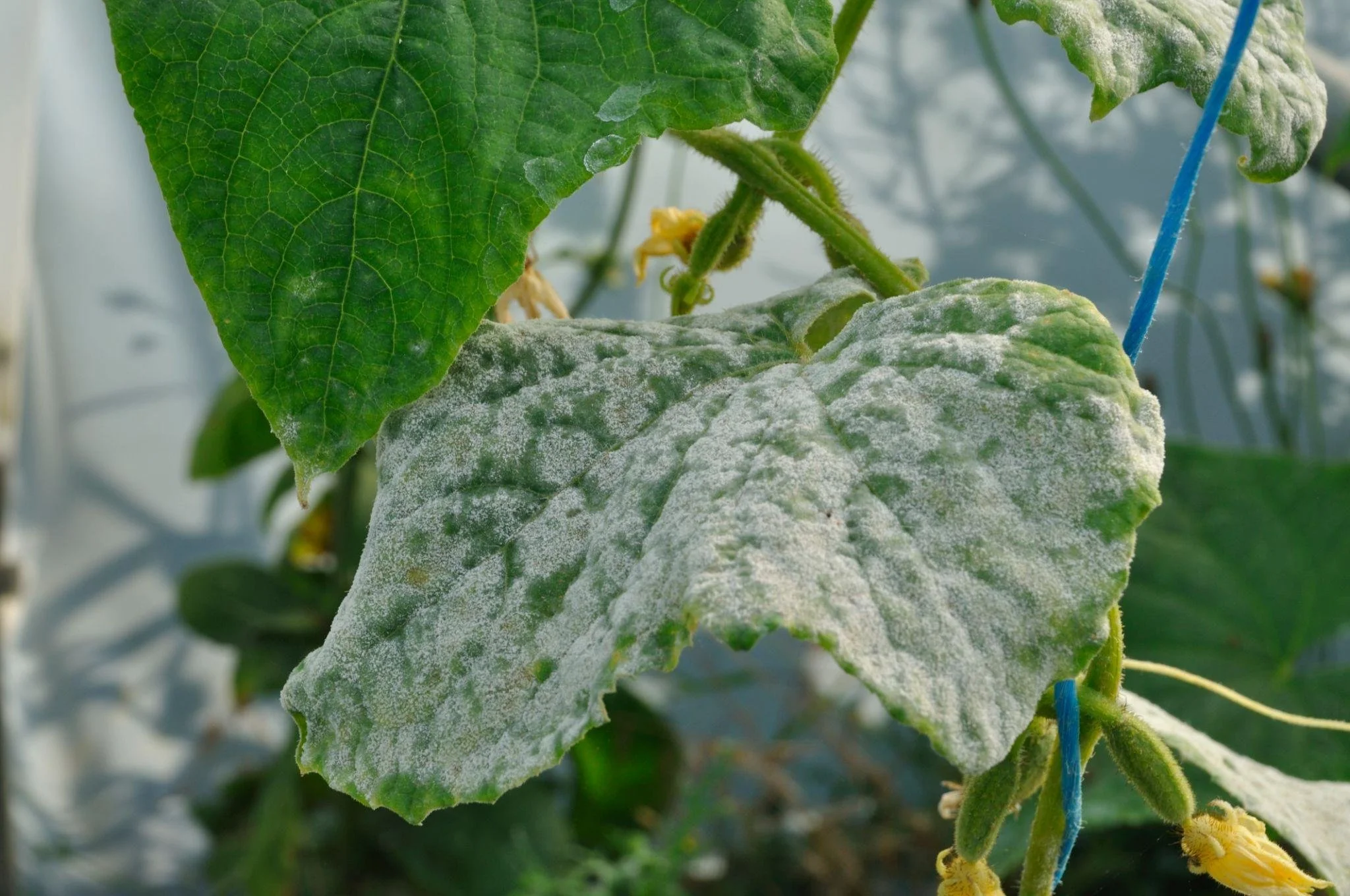
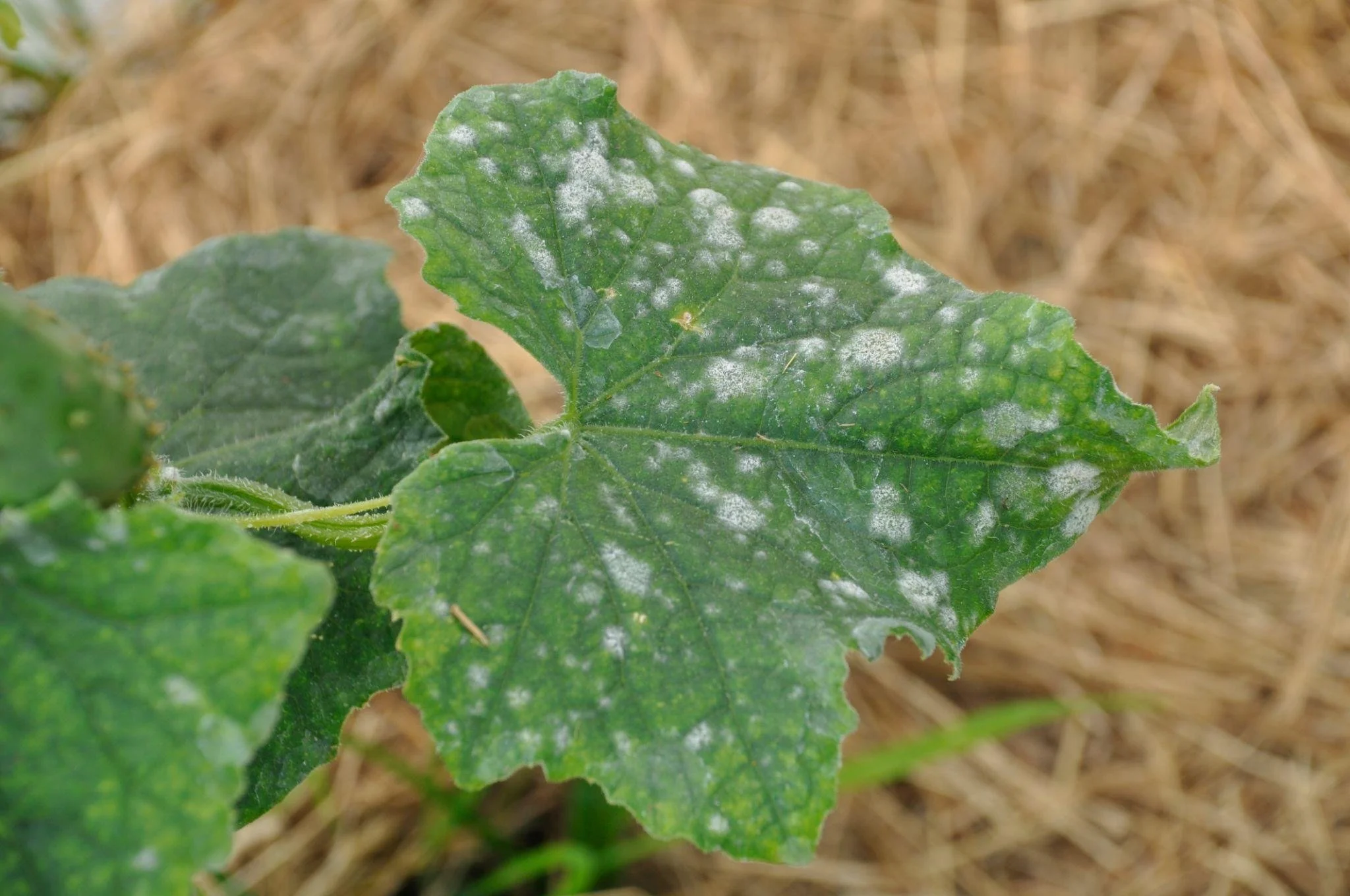
Powdery mildew appears as a white or gray powdery coating on the surface of leaves, stems, or buds. It often starts as small circular spots and spreads into larger patches, eventually covering entire leaf surfaces. Unlike many other fungal diseases, it sits on top of the leaf, not inside it.
Quick checklist:
White, dusty, flour-like spots
Circular patches that expand outward
Found on upper leaf surfaces first
Leaves may yellow, curl, or dry out later
Description:
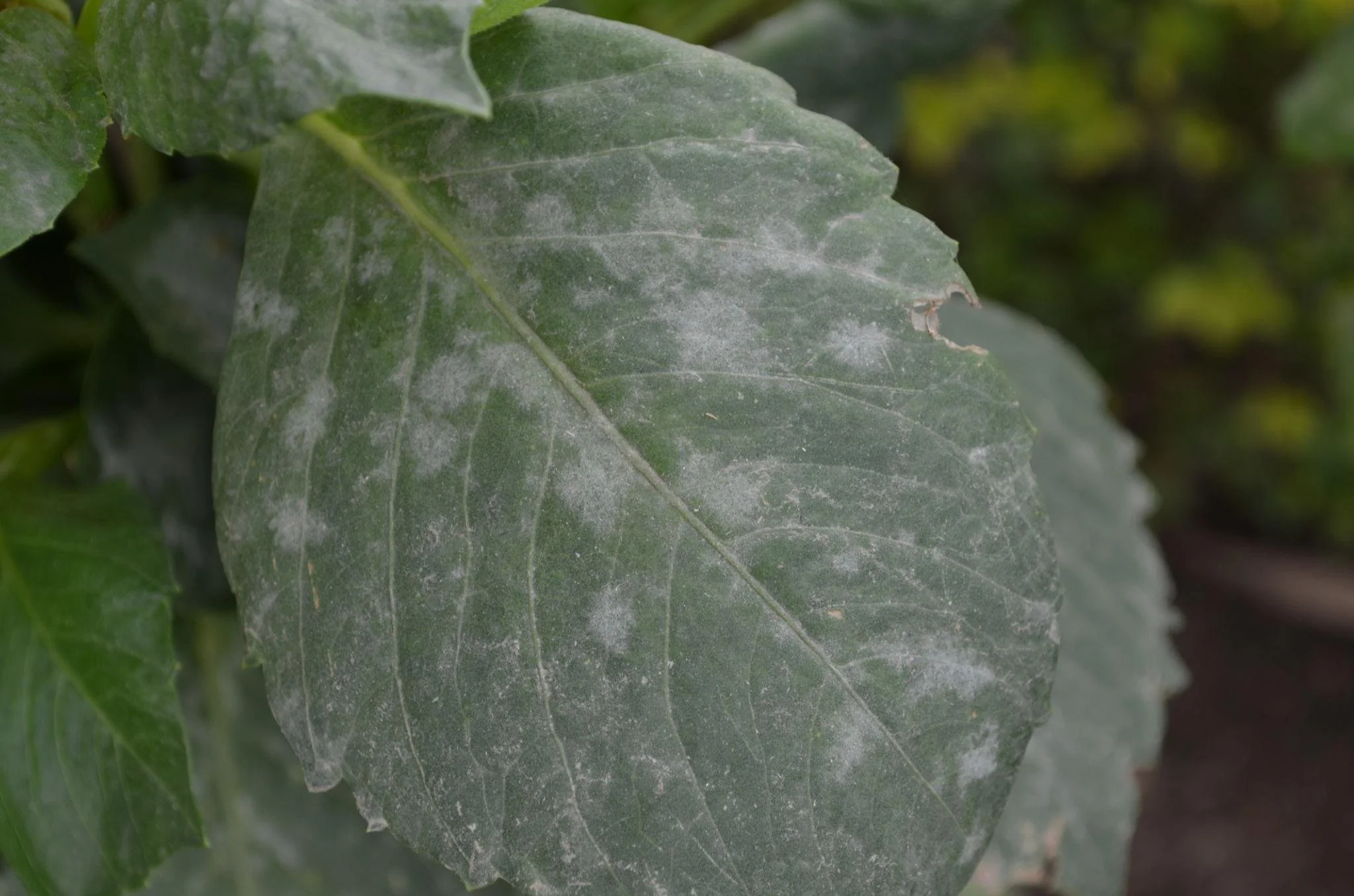
Powdery mildew prefers low airflow and shaded areas. It often starts on lower leaves, inner canopy, and dense growth zones where humidity lingers and air circulation is poor.
Quick checklist:
Lower and older leaves
Shaded interior canopy
Crowded plant areas
Stems and petioles

Why It Happens (Conditions That Trigger It)
Description:
Powdery mildew thrives in humid environments with poor airflow, but unlike other fungi, it does not require standing water. It spreads rapidly through spores carried by air, tools, or clothing.
Quick checklist:
High humidity (40–70%+)
Poor air circulation
Crowded plants
Warm days and cool nights
Powdery Mildew
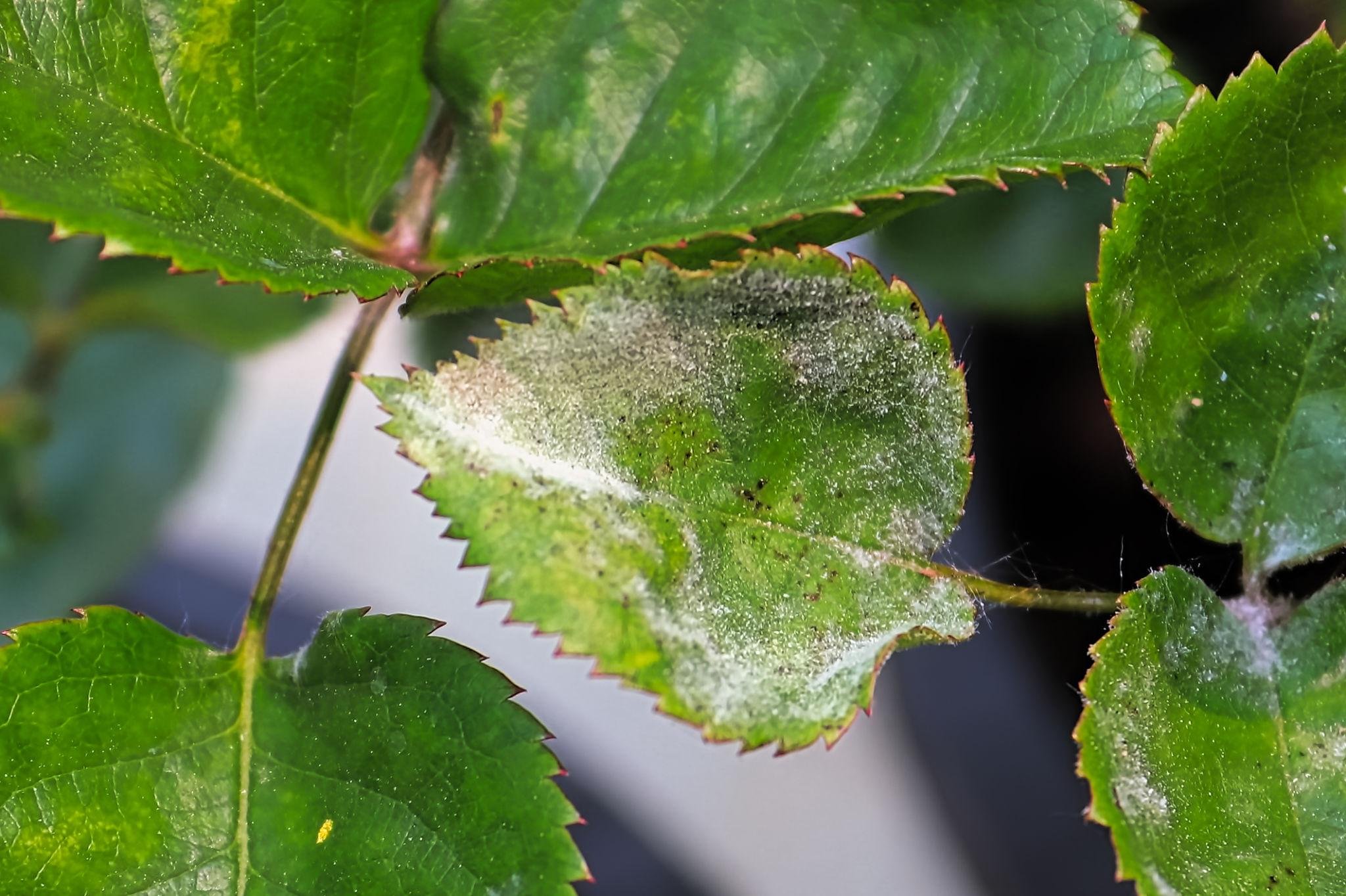
Identify powdery mildew by its white powdery spots on plant leaves that look like flour or dust. Early signs of powdery mildew start as small white circular patches that quickly spread across leaf surfaces, stems, and buds. Unlike other fungal diseases, powdery mildew grows on top of the leaf surface, making it easy to see.
Powdery Mildew Spreads Fast
LPowdery mildew spreads through airborne spores, meaning:
One infected leaf can affect your entire grow
It can travel between rooms, plants, or even gardens
That’s why early detection + fast treatment is critical.
Treatment Plan
Prune and remove leaves showing white powdery mildew spots. This reduces spores and slows spread. Dispose of debris outside the grow area and sanitize tools.
Remove Infected Leaves
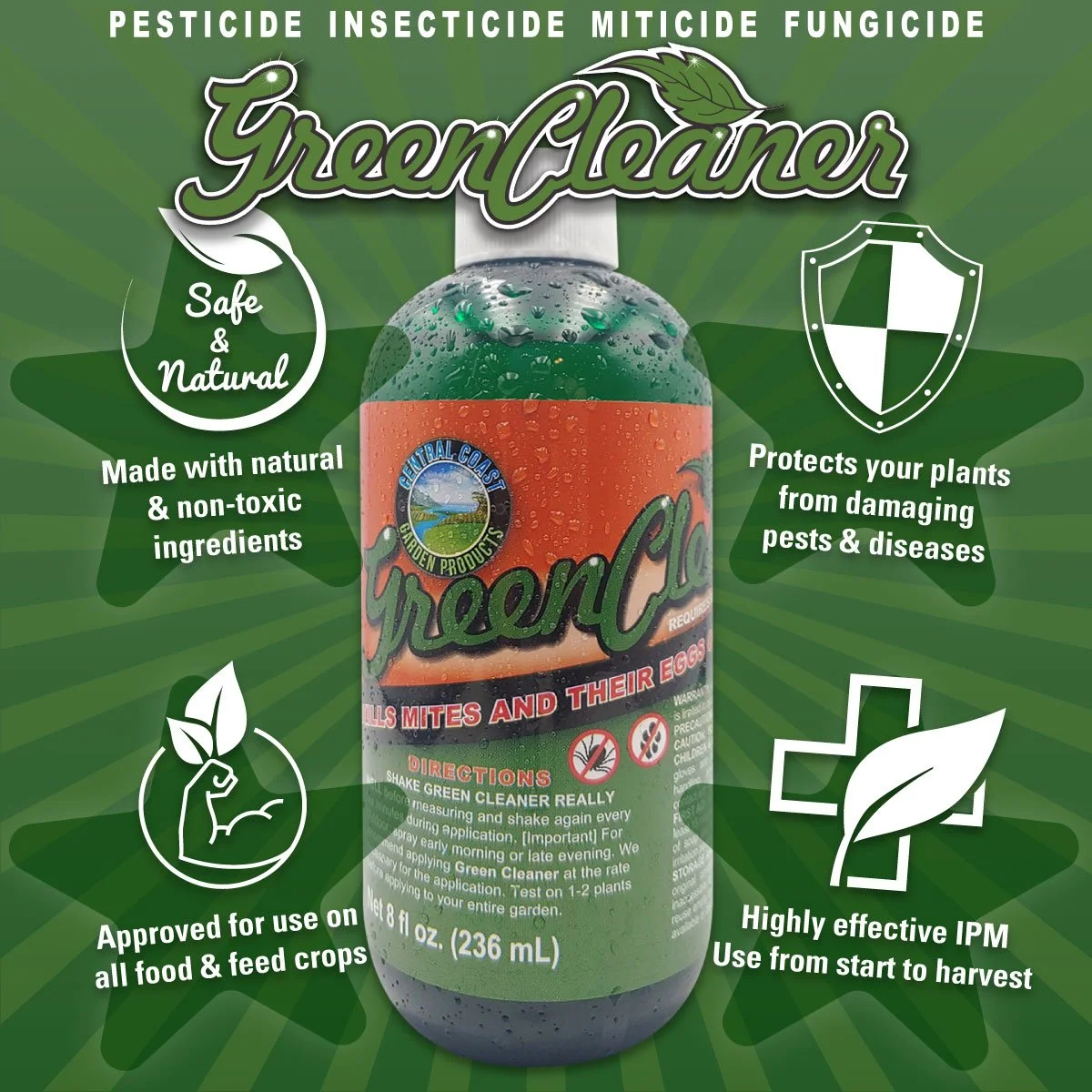
Apply Green Cleaner IPM spray for powdery mildew to all leaf surfaces, including undersides. It kills mildew on contact and helps prevent regrowth. Repeat every 3–5 days if needed.
Spray Green Cleaner IPM
Reduce humidity to 40–50% and add fans to improve airflow. Powdery mildew thrives in stagnant, humid environments.
Lower Humidity & Increase Airflow
Use Green Cleaner IPM preventatively every 7–14 days and inspect plants often. Prevention stops future outbreaks early.
Prevent with Regular IPM Care
Prevention Checklist
Optimize Light Exposure to Reduce Fungal Growth
1
Proper lighting plays a major role in preventing powdery mildew. Plants that receive adequate light are healthier and less susceptible to disease. Poor light penetration creates shaded, damp areas within the canopy where powdery mildew can develop. Ensuring even light distribution, adjusting plant spacing, and using full-spectrum grow lights indoors can help eliminate these problem zones. Healthy, well-lit plants are naturally more resistant to fungal infections.
Use Proper Watering Techniques to Avoid Moisture Buildup
2
Watering methods directly impact the likelihood of powdery mildew development. Overhead watering can leave moisture on leaves, creating an ideal environment for fungal spores to germinate. Instead, watering at the base of the plant keeps foliage dry and reduces risk. Watering early in the day allows any incidental moisture to evaporate quickly. Consistent watering practices that avoid excessive humidity around the plant are essential for long-term powdery mildew prevention.
Apply Preventative IPM Sprays Like Green Cleaner IPM
3
Using a preventative spray is one of the most reliable ways to protect plants from powdery mildew. Green Cleaner IPM is an effective solution for both treatment and prevention, making it a key component of any integrated pest management program. Regular foliar applications help create a protective barrier on plant surfaces, stopping powdery mildew spores before they can establish. Green Cleaner IPM works by targeting fungal pathogens while remaining safe for plants when used as directed. Consistent use throughout the grow cycle ensures ongoing protection and reduces the likelihood of outbreaks.
Maintain Proper Nutrient Balance to Strengthen Plants
4
Plant nutrition plays a significant role in disease prevention. Overfeeding nitrogen can lead to soft, lush growth that is highly susceptible to powdery mildew. Maintaining a balanced nutrient regimen supports strong cell structure and overall plant immunity. Providing the correct levels of macro and micronutrients ensures that plants remain vigorous and capable of resisting fungal infections. A well-fed plant is far less likely to develop powdery mildew under normal conditions.
Keep Your Grow Area Clean and Sanitary
5
Sanitation is a fundamental part of powdery mildew prevention. Fungal spores can survive on surfaces, tools, and plant debris, making cleanliness essential in any grow environment. Regularly cleaning grow tents, greenhouses, and gardening tools helps eliminate potential sources of contamination. Removing dead leaves and plant material prevents spores from spreading and reduces the chance of reinfection. A clean grow space is one of the simplest yet most powerful defenses against powdery mildew.
Monitor Plants Daily for Early Detection
6
Daily plant inspection is crucial for catching powdery mildew early. The first signs often appear as small white powdery spots on leaves, which can quickly spread if left untreated. Early detection allows for immediate action, including removing affected areas and applying treatments such as Green Cleaner IPM. Consistent monitoring ensures that any issues are addressed before they become severe, protecting both plant health and yield.
Need a Product?
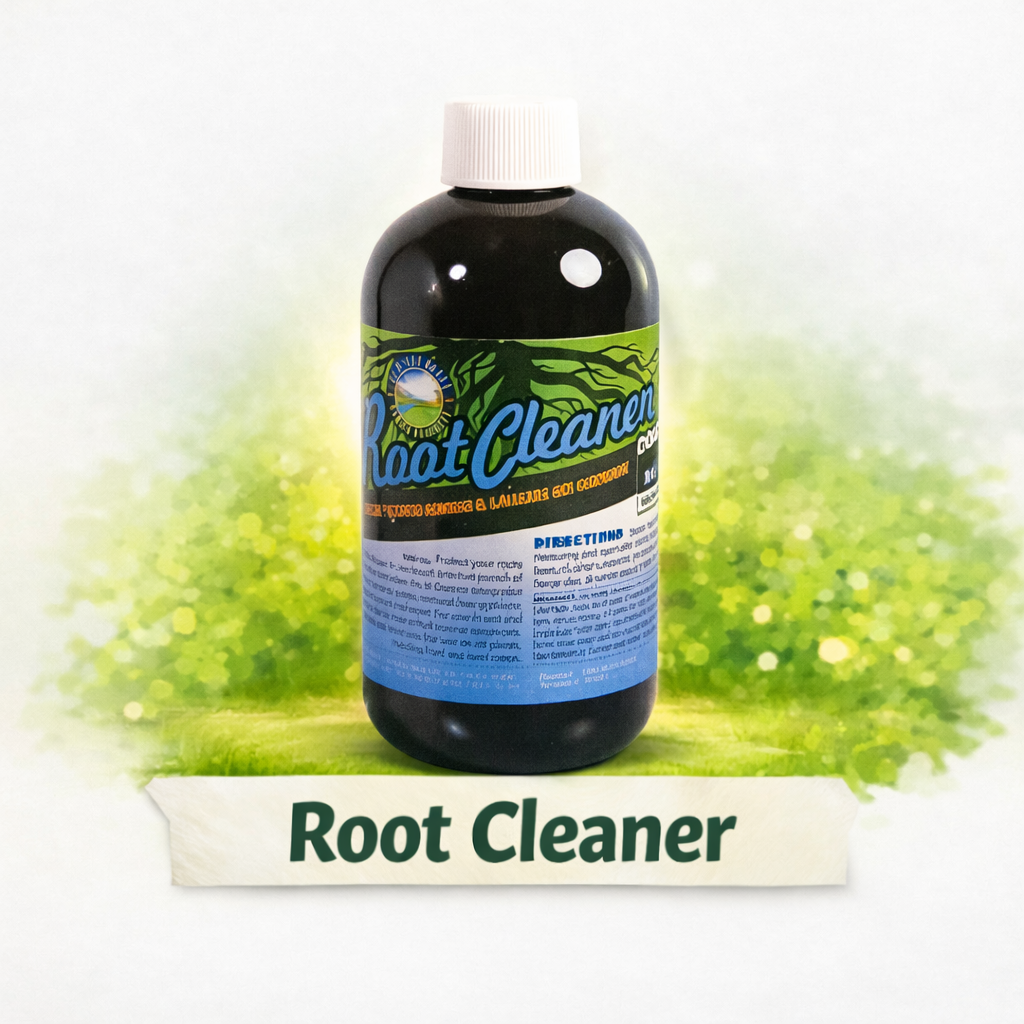
Root Cleaner
Fast and effective soil drench that helps eliminate fungus gnat larvae, flush out root-zone buildup, and support healthier plant roots for stronger growth in houseplants, raised beds, and container gardens.

Green Cleaner
Safe and effective integrated pest management (IPM) solution for natural & non-toxic pest control—helping you prevent and treat common garden pests like aphids, spider mites, whiteflies, and fungus gnats while protecting plants
Frequently Asked Questions
-
Yes. Powdery mildew spreads easily through airborne spores. One infected plant can quickly contaminate an entire garden if not treated early.
-
Powdery mildew is caused by fungal spores that spread through the air. Key triggers include:
High humidity (but not necessarily wet leaves)
Poor air circulation
Overcrowded plants
Warm temperatures (60–80°F)
-
Prevention is key:
Improve airflow and spacing
Avoid excess humidity
Use preventative sprays
Routine use of Green Cleaner IPM helps create a protective barrier that prevents spores from taking hold.
-
Common plants affected include:
Cucumbers & squash
Roses
Cannabis
Tomatoes
Zucchini
-
Yes, if left untreated, powdery mildew can:
Reduce photosynthesis
Weaken plant growth
Lead to plant death in severe cases
Early treatment with Green Cleaner IPM can stop damage before it becomes irreversible.
-
Apply treatment:
At the first sign of white spots
During early morning or evening
As part of a preventative schedule
Consistent use of Green Cleaner IPM ensures long-term protection and healthier plants.