
Quick ID Guide
Root Damage & larvae
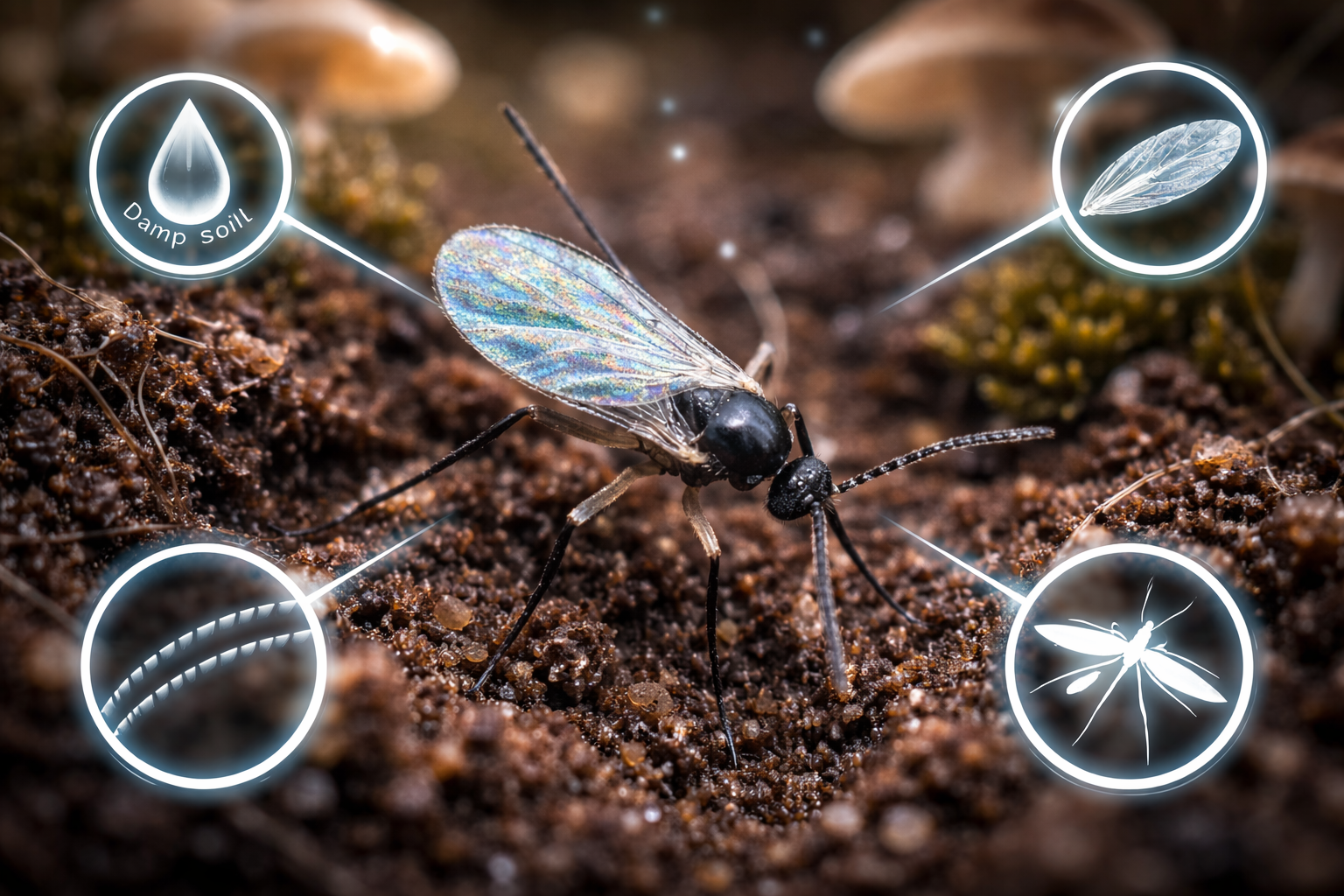
Fungus Gnat Identification (Quick ID)
Quick checklist (symptoms):
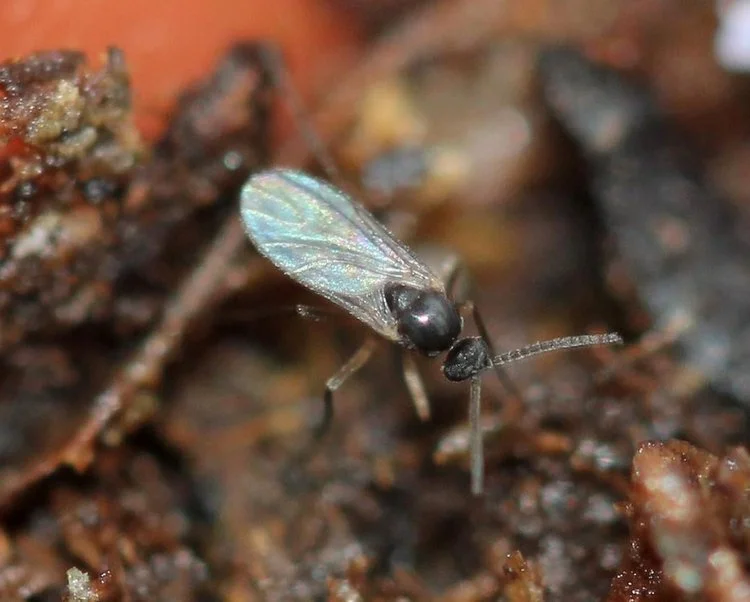
Small black gnats hovering near pots, soil surface, or plant trays
Adults run across the soil when disturbed
More activity after watering or when lights are on (grow tents/indoor gardens)
Often shows up in multiple pots (shared environment)
Lookalikes to rule out (quick):
Fruit flies: usually around kitchens, trash, and ripe fruit—not soil
Drain flies: fuzzy/moth-like, hang out near sinks and drains
Shore flies: more common in very wet media/greenhouses; stronger flyers
Damp Soil & Draining Trays
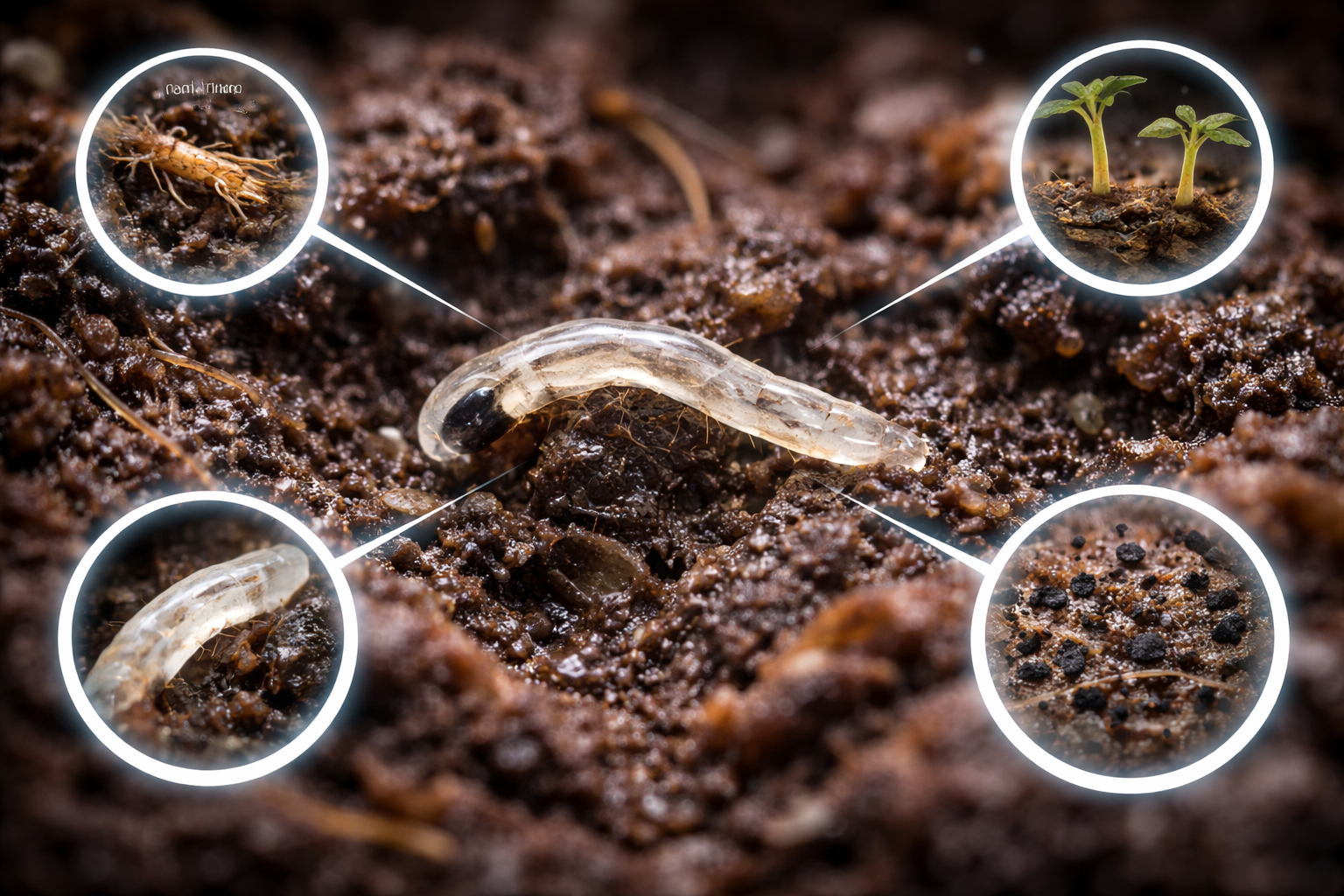
Larvae signs & plant symptoms:
Seedlings/clones stall, look weak, or “fail to thrive”
Yellowing, drooping, or wilting even when soil is moist
Roots appear reduced, stressed, or prone to rot in consistently wet soil
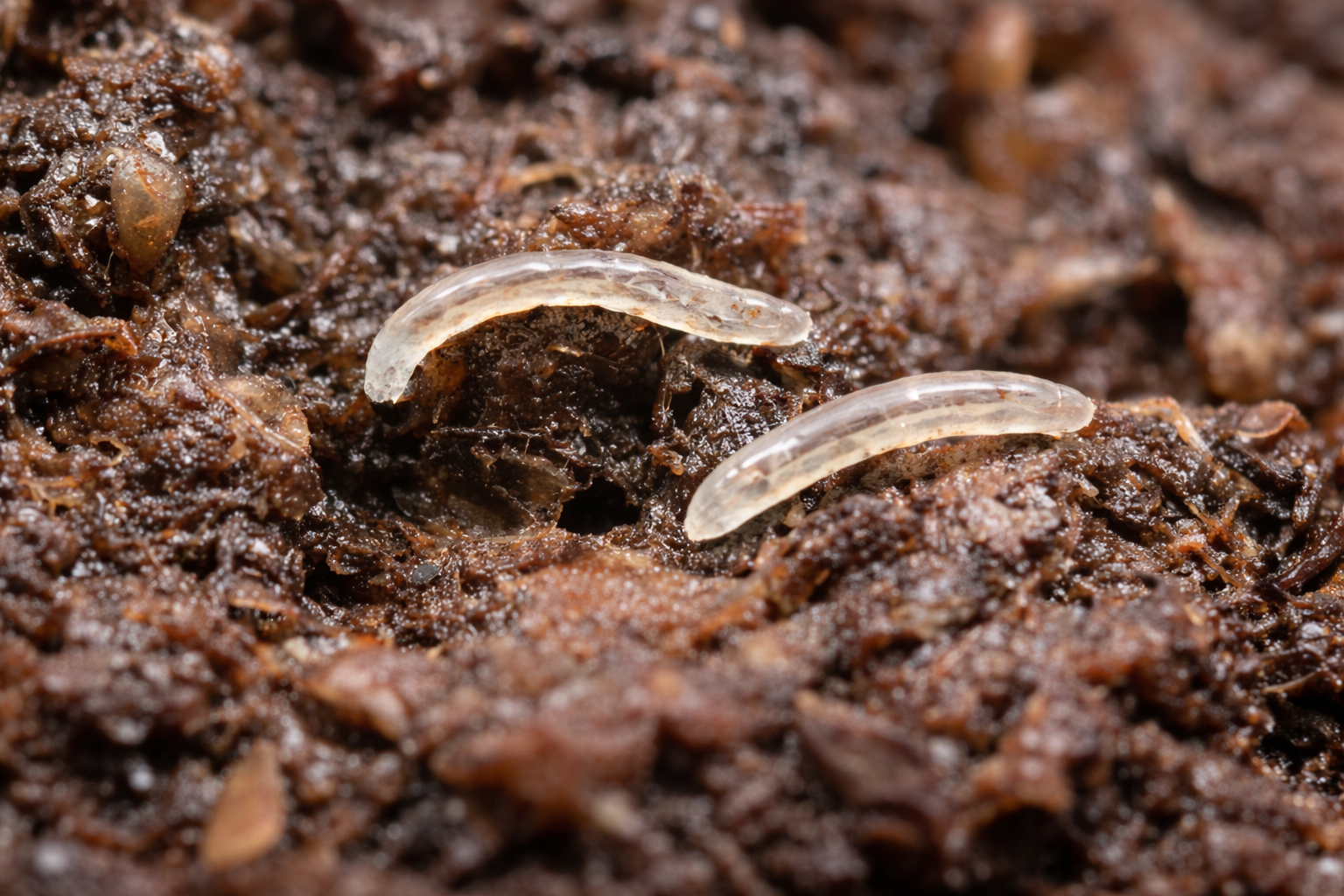
Tiny translucent/whitish worm-like larvae in the top 1–2 inches of soil
Heavy infestations can cause root damage and slow nutrient uptake
Where to look:
Top 1–2 inches of soil (especially around edges of the pot)
Under mulch layers, wet top-dressing, or algae growth
Trays, saucers, and runoff areas that stay damp
Fungus Gnat Larvae in Soil (Signs & Damage)
Plant Signs of Fungus Gnats
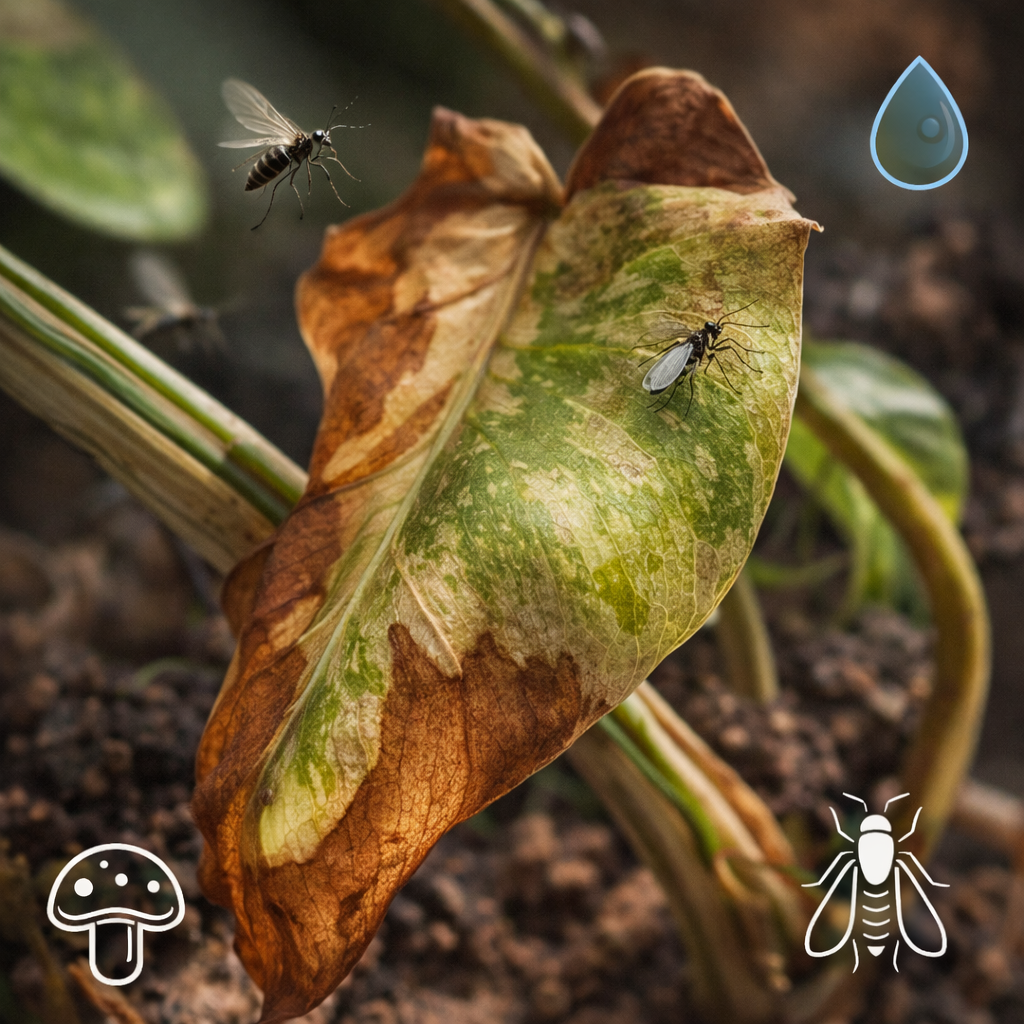
Fungus Gnat Foliar Damage:
Yellowing Foliage Symptoms: Early sign of fungus gnat plant damage; leaves turn yellow due to reduced root function from larval feeding.
Wilting Despite Watering: Plants wilt suddenly as damaged roots fail to absorb water, a key fungus gnat infestation indicator.
Stunted Plant Growth: Seedlings and young plants show slowed development from root hair loss caused by fungus gnats.
Leaf Drop and Loss: Severe root damage leads to foliage shedding, worsening overall plant vigor in houseplants.
Disease Transmission to Leaves: Adult fungus gnats spread foliar pathogens like Botrytis blight via body contact.
Fusarium Wilt Spread: Larvae create root wounds that allow entry of soil-borne fungi, resulting in foliar wilting.
Fungus Gnat
Fungus gnats are tiny black flies that thrive in moist potting soil and are common in houseplants, seedlings, and indoor gardens. Adults are annoying, but the larvae live in the soil and can damage tender roots, slowing plant growth. If you notice small flies around plants, overwatered soil, or weak new growth, you may have a fungus gnat infestation—and this guide covers fast fungus gnat identification, fungus gnat control, and prevention.
Fungus Gnat Larvae
Fungus gnat larvae are tiny, worm-like pests that live in the top layer of moist potting soil. They’re usually translucent white with a shiny black head, and they feed on algae, decaying organic matter, and—when populations get high—tender plant roots. This root feeding can slow growth, cause yellowing, drooping, and make seedlings or cuttings fail. Because larvae thrive in consistently damp conditions, fungus gnat problems often signal overwatering or poor soil drainage.
Treatment Plan
Identify fungus gnats by spotting adult flies, white larvae in soil, or wilting plants. Isolate affected houseplants to stop spread. Fact: Overwatering creates ideal breeding grounds—let soil dry slightly before treating.
Assess Infestation:
Move the plant away from others (gnats spread fast between pots). Let the top 1–2 inches of soil dry a bit first; larvae thrive in constantly wet media.
Reduce Moisture
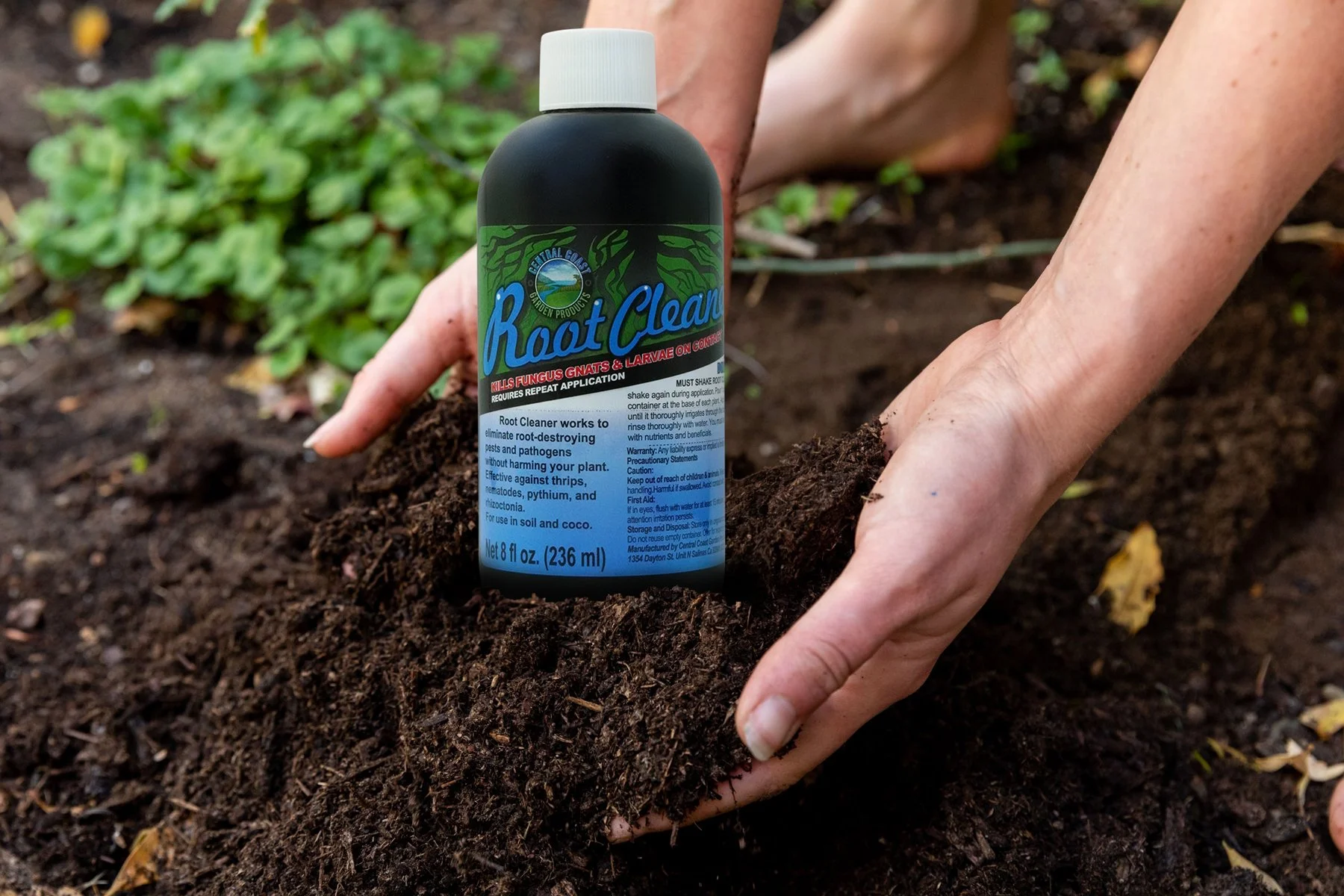
Dilute 1-2 tsp Root Cleaner per gallon of water for mild cases (1 tbsp for severe). Stir well. Saturate soil evenly until it drains out. Treat root zones thoroughly. The solution penetrates to kill larvae.
Apply Natural Soil Wash
Check for reduced activity; reapply every 2-3 days. Rinse Soil: Wait 15 minutes, then flush with plain water until clear. Full elimination takes 2-4 weeks, as eggs hatch in cycles. Maintain dry soil to prevent future fungus gnats infestations.
Monitor and Repeat:
Prevention Checklist
To prevent fungus gnats in houseplants, let the top 1–2 inches of soil dry out between waterings, use pots with drainage holes, and empty saucers so roots don’t sit in standing water. Avoid frequent light watering that keeps the soil surface damp—this is where fungus gnat eggs are laid. For better fungus gnat control, water less often, improve airflow, and use a well-draining potting mix.
1
Avoid Overwatering
Improve Drainage
2
Opt for sterile, well-aerated soil mixes without excessive compost or organic matter, which can attract gnats. Adding perlite improves drainage and reduces moisture retention.
Remove Debris & Standing water
3
Promptly clean up fallen leaves, flowers, or other organic matter around your plants, as these provide food sources for gnat larvae and encourage infestations.
Allow the top layer of soil to dry out between waterings
4
Overwatering is a primary cause of fungus gnat infestations, as larvae need moist soil to survive. Let the top 1-2 inches of soil dry completely before watering again to discourage egg-laying.
Need a Product?
Root Cleaner
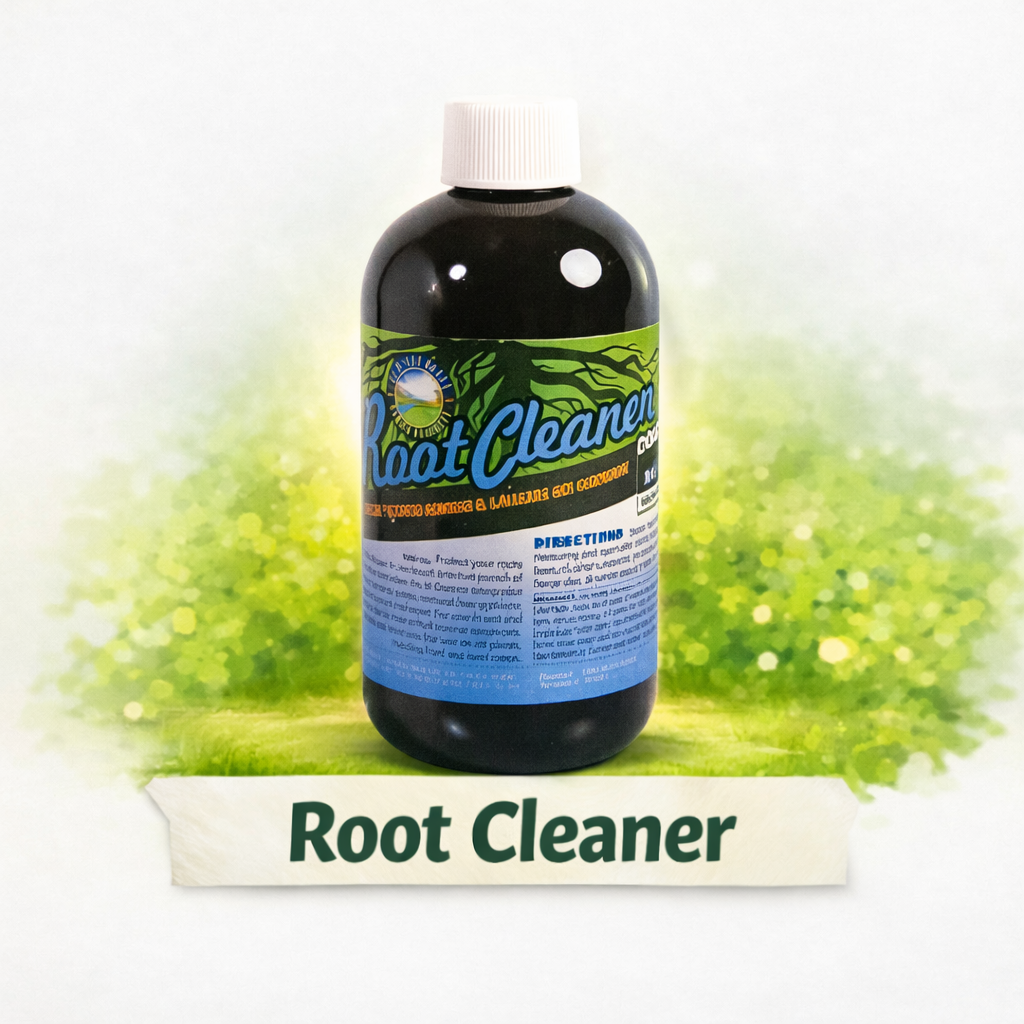
Fast and effective soil drench that helps eliminate fungus gnat larvae, flush out root-zone buildup, and support healthier plant roots for stronger growth in houseplants, raised beds, and container gardens.
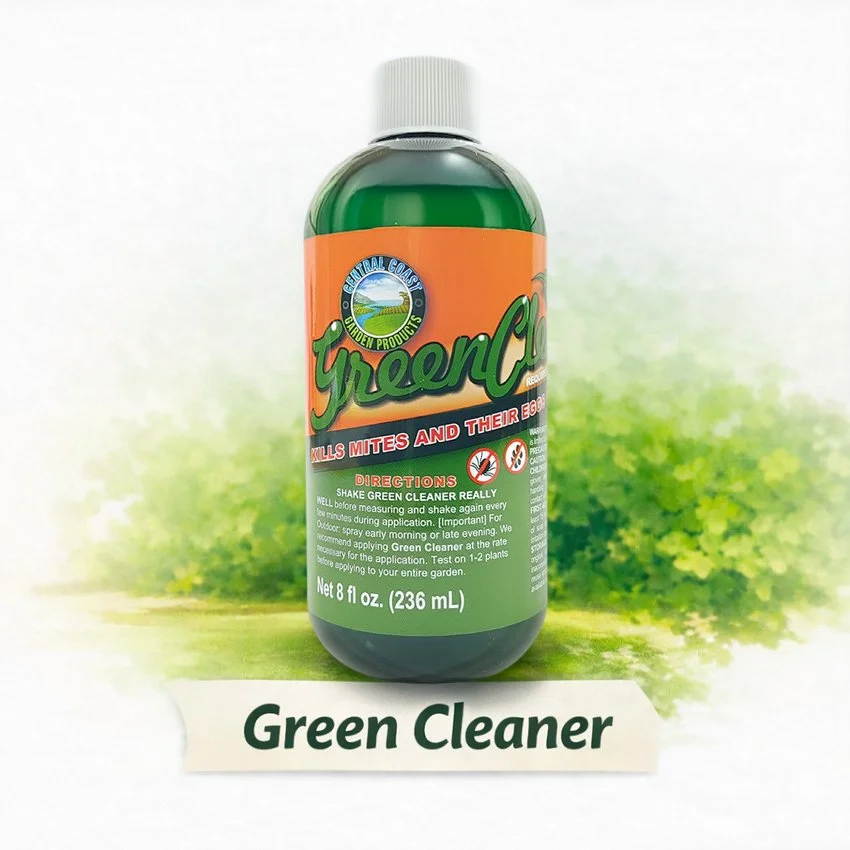
Green Cleaner
Safe and effective integrated pest management (IPM) solution for natural & non-toxic pest control—helping you prevent and treat common garden pests like aphids, spider mites, whiteflies, and fungus gnats while protecting plants
Frequently Asked Questions
-
Fungus gnats are commonly associated with overwatered houseplants, as they lay eggs in moist soil cracks and crevices. Infestations often worsen in fall when infested outdoor plants are brought inside, or from new plants, open bags of potting soil, or open windows.
-
Adult fungus gnats do not feed on or damage plants but are a cosmetic nuisance. Larvae feed on decaying organic matter and fungi in soil, but in high numbers, they may damage roots by feeding on root hairs or tunneling into them, limiting nutrient uptake. Healthy plants with robust roots are usually unaffected.
-
Females lay up to 200 eggs in clusters on moist soil, hatching in 3-6 days. Larvae develop through four stages over 1-2 weeks, then pupate near the soil surface. Adults emerge after 4-5 days and live about one week. The full cycle from egg to adult takes 3-4 weeks under optimal warm conditions,
-
Fungus gnats will not go away on their own. You need to address the issue by reducing moisture, removing infested soil, & using natural IPM like Green Cleaner, as small infestations can quickly grow due to their rapid breeding.
-
Root Cleaner is an all-natural concentrate that kills fungus gnats and their larvae on contact, along with other soil pests and pathogens like pythium that cause root rot.
-
Fungus gnats can be mistaken for fruit flies, but they have a Y-shaped vein pattern near the wing tips, while fruit flies do not. Fungus gnats are also typically found around houseplants and moist soil, whereas fruit flies are attracted to ripening fruit.